

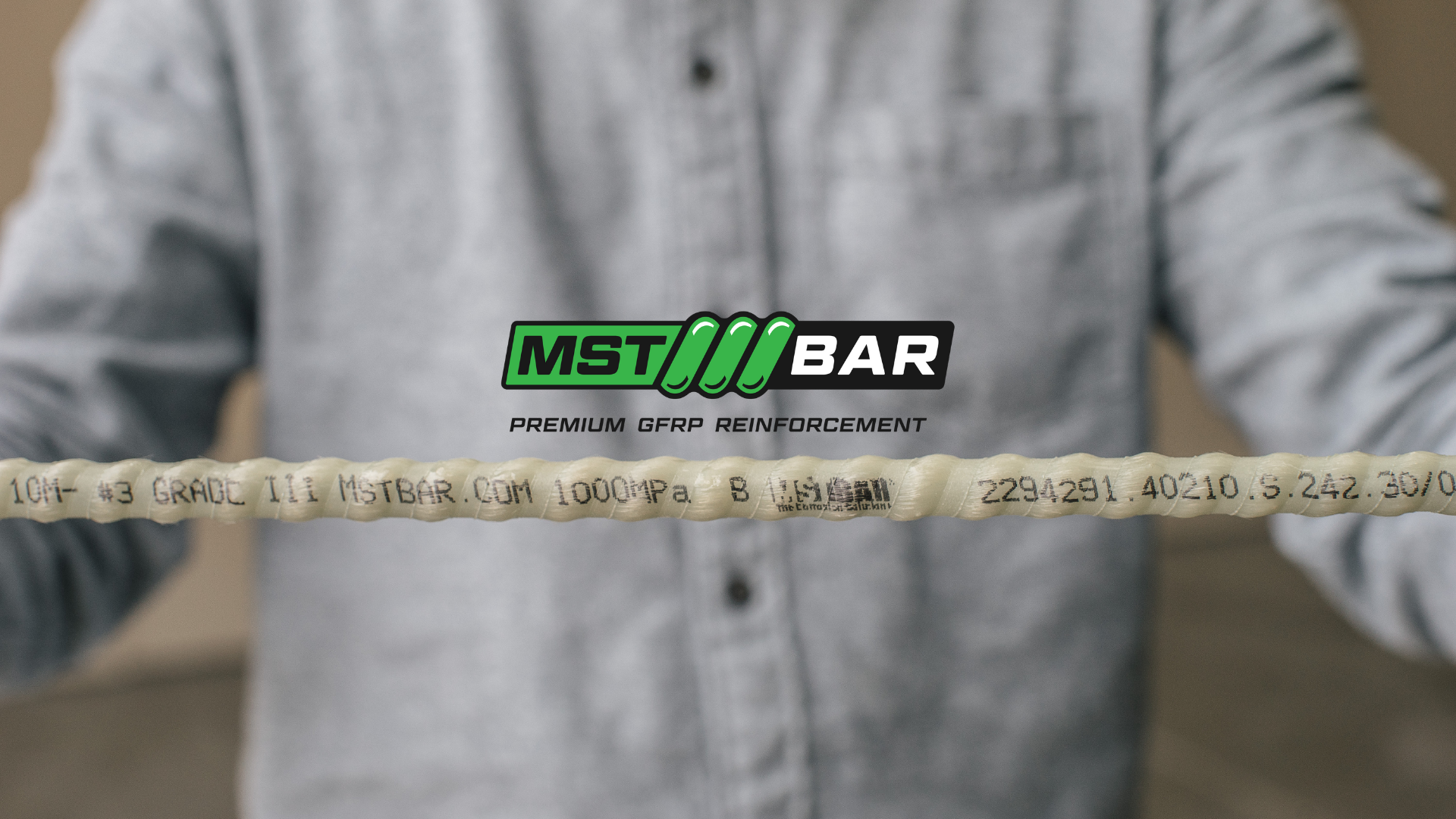
For decades, steel rebar has been the unquestioned backbone of reinforced concrete. It’s familiar, it’s strong, and it’s what most of the industry was trained on. But construction, like every other industry, doesn’t stand still. New materials emerge when old ones start showing their limits, and that’s exactly where MST-BAR fiberglass rebar enters the picture.
Traditional steel does its job well, but it comes with baggage. It’s heavy. It rusts. It requires careful handling, coatings, and long-term maintenance strategies, especially in harsh environments like coastal regions, roadways exposed to salt, wastewater facilities, and agricultural buildings. Over time, corrosion leads to cracking, spalling, and expensive repairs that nobody budgets for at the start of a project.
A New Generation of Rebar Enters the Jobsite
MST-BAR fiberglass rebar takes a completely different approach. Made from glass fiber reinforced polymer, it doesn’t corrode. Ever. That single fact alone changes the lifecycle equation of a concrete structure. Instead of designing around the inevitability of rust, builders can design for durability measured in generations, not maintenance cycles.
Then there’s the weight factor. Anyone who has wrestled bundles of steel rebar on a job site knows how physically demanding it can be. MST-BAR is dramatically lighter, which makes transportation easier, handling safer, and installation faster. Crews can move more material with less effort, and that efficiency quietly compounds across an entire project. Less fatigue, fewer injuries, smoother workflows. Those are real-world benefits that don’t show up on a spec sheet but matter deeply on site.
Another advantage that’s reshaping how projects are planned is MST-BAR’s non-conductive and non-magnetic nature. In specialized builds like hospitals, data centers, research facilities, and infrastructure projects near sensitive equipment, this is a major win. It eliminates interference issues and opens up design possibilities that would otherwise require workarounds or additional materials.
Strength Without the Long-Term Tradeoffs
From a structural standpoint, MST-BAR delivers impressive tensile strength while remaining dimensionally stable. It doesn’t expand or contract due to corrosion, which helps concrete maintain its integrity over time. Cracks are minimized, performance is more predictable, and long-term structural health improves. For engineers and owners alike, that predictability is invaluable.
There’s also a sustainability angle that’s becoming harder to ignore. Longer-lasting structures mean fewer repairs, less demolition, and reduced material consumption over the life of a building. Lighter materials mean lower transportation emissions. When durability and efficiency align with environmental responsibility, it’s not just good engineering, it’s good business.
What makes MST-BAR especially compelling is how seamlessly it integrates into modern construction methods. It pairs naturally with advanced building systems, including insulated concrete forms, precast elements, and innovative foundation designs. Builders don’t need to reinvent their entire process. They simply upgrade one of the most critical components and immediately see the benefits ripple outward.
Shifting the Industry Toward Long-Term Thinking
The real revolution is about shifting the mindset of construction from short-term solutions to long-term performance. MST-BAR fiberglass rebar challenges the assumption that corrosion and heavy handling are just part of the job. It proves that reinforcement can be stronger, lighter, more durable, and smarter all at once.
As the industry continues to push toward better buildings, longer lifespans, and more resilient infrastructure, materials like MST-BAR aren’t a future concept. They’re already here, quietly redefining what modern construction looks like, one reinforced pour at a time.
.jpg)

